Kubernetes
Open source container orchestration platform that automates the deployment, scaling and management of containerized applications.
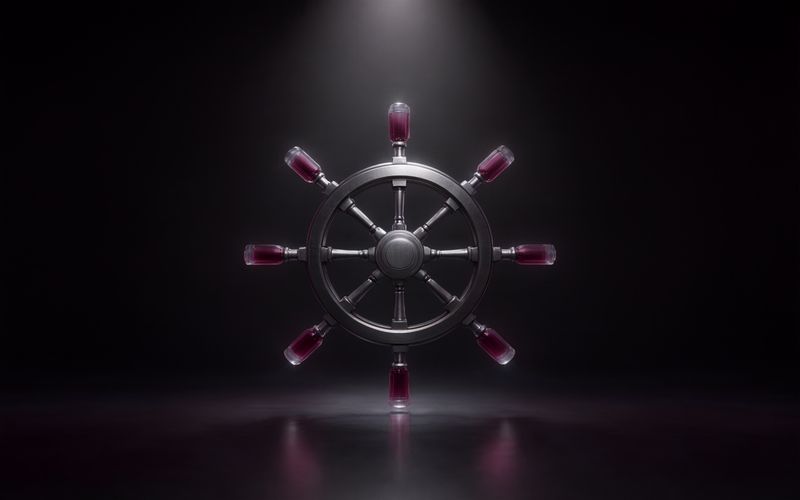
Kubernetes (K8s) is an open source container orchestration platform that automates the deployment, scaling and management of containerized applications. Originally developed by Google and donated to the Cloud Native Computing Foundation (CNCF) in 2015, alongside the 1.0 release, Kubernetes has become the de facto standard for container orchestration, with an 80% adoption rate in production (CNCF 2024). It manages thousands of containers across clusters of machines, ensuring high availability, automatic scaling and resilience.
Technical definition
Architecture and components
Kubernetes is built on a master-worker architecture. The control plane (master) includes the API Server (the single entry point), etcd (a distributed database that stores the cluster state), the Scheduler (pod placement) and the Controller Manager (control loops). Worker nodes run the kubelet (the agent that manages pods), kube-proxy (network routing) and the container runtime (Docker, containerd or CRI-O).
Core concepts
A Pod is the smallest deployable unit, wrapping one or more containers that share networking and storage. Deployments handle pod replication and updates through rolling updates. Services expose pods through a stable IP and internal DNS. ConfigMaps and Secrets keep configuration separate from code. Namespaces logically isolate resources within a cluster.
Orchestration mechanisms
The Scheduler places pods according to constraints (CPU, memory, affinity). The Horizontal Pod Autoscaler automatically adjusts the number of replicas based on metrics (CPU utilization, requests per second). Self-healing restarts failed containers and replaces pods on failing nodes. Rolling deployments update pods progressively with no downtime: it's the default strategy for Deployments, with at most 25% of pods unavailable during the update.
Standards
Container Runtime Interface (CRI)
An interface introduced with Kubernetes 1.5 (2016) to standardize communication between the kubelet and container runtimes. CRI makes containerd and CRI-O interchangeable. Deprecated in 1.20, native Docker support (dockershim) was removed in Kubernetes 1.24 (2022): Docker Engine can now only be used through the cri-dockerd adapter.
Open Container Initiative (OCI)
An industry standard that defines the container image format (OCI Image Spec) and the runtime (OCI Runtime Spec). Kubernetes consumes OCI-compliant images from any registry (Docker Hub, Google Container Registry, Amazon ECR). OCI compatibility guarantees workload portability between clouds and on-premise environments.
Cloud Native Computing Foundation (CNCF)
Kubernetes is a CNCF graduated project (the highest maturity level). The CNCF runs a certification program (the Certified Kubernetes Conformance Program) that guarantees interoperability between distributions (GKE, EKS, AKS, OpenShift, Rancher, etc.). The project ships roughly three minor releases a year and maintains the three most recent ones (n, n-1, n-2).
Current challenges and key figures
Massive adoption and ecosystem
80% of organizations run Kubernetes in production, up from 66% in 2023 (CNCF 2024 annual survey). The ecosystem counts more than 5.6 million developers, and the major clouds all offer a managed service (AWS EKS, Google GKE, Azure AKS).
Performance and scalability
Kubernetes is designed for clusters of up to 5,000 nodes, 110 pods per node and 150,000 pods in total. Pod startup time depends largely on image size: lightweight images speed up deployments and auto-scaling.
Security and compliance
Kubernetes security incidents often stem from misconfigurations: overly permissive RBAC, plaintext secrets in manifests, unscanned images. Security standards include the CIS Kubernetes Benchmark, Pod Security Standards (PSS) and Network Policies for network isolation.
Practical applications
High-availability e-commerce and SaaS
For a commerce platform or a SaaS product, Kubernetes absorbs seasonal peaks (sales, Black Friday) through auto-scaling, and rolling deployments make it possible to ship several times a day with no downtime. StatefulSets manage distributed databases, for example Vitess for MySQL sharding.
Streaming and media
Streaming services see large traffic swings over the course of the day: auto-scaling adjusts capacity instead of sizing it for the peak. Deployments often follow a GitOps approach (Flux, Argo CD), and CronJobs orchestrate scheduled data processing, overnight in particular.
Machine learning and distributed computing
Kubeflow makes it possible to run machine learning pipelines on Kubernetes. GPU workloads (model training) use node selectors to target GPU instances. Batch jobs (Spark on K8s) dynamically provision large numbers of pods, and the cluster autoscaler adds or removes nodes depending on load, so you don't pay for idle machines.
Standards and Specifications
Container Runtime Interface (CRI)
Standard API for integrating container runtimes with Kubernetes
Open Container Initiative (OCI)
Specification for container image formats and runtimes
Cloud Native Computing Foundation (CNCF)
Foundation that hosts Kubernetes and sets cloud-native standards
Frequently Asked Questions
What is the difference between Kubernetes and Docker?
Docker is a container runtime used to build, package and run individual containers. Kubernetes is an orchestration platform that manages hundreds or thousands of Docker containers across multiple machines.
Docker Swarm, Docker's own orchestration alternative, is used by a minority of organizations, versus 80% for Kubernetes according to the CNCF Survey 2024. Kubernetes offers advanced features such as auto-scaling, rolling deployments and self-healing that Docker Swarm doesn't provide natively.
What are the benefits of Kubernetes for a company?
Kubernetes optimizes resource usage by packing containers tightly onto the cluster's machines, which limits the capacity you pay for without using. It strengthens availability through automatic replication and self-healing: a failed container is restarted, a lost pod is recreated elsewhere.
Releases become more frequent and less risky, because rolling updates replace pods progressively, with no downtime. Horizontal auto-scaling absorbs traffic spikes without manual intervention.
Is Kubernetes a good fit for small applications?
Kubernetes comes with high upfront complexity, and the learning curve is long for a team that's new to DevOps. For a simple application, made up of a few services and without large swings in load, alternatives such as Docker Compose or a PaaS platform (Render, for example) are a better fit.
Kubernetes starts to pay off as the number of services grows or when auto-scaling becomes critical. Managed offerings (GKE, EKS, AKS) take control plane management off the team's hands, but remain expensive at low volumes.
How much does Kubernetes cost?
Kubernetes is open source and free. The real costs come from infrastructure: the cluster's machines, the control plane that some managed providers charge for (GKE, EKS, AKS), storage and network traffic. A high-availability production cluster costs significantly more than a development cluster, because it multiplies nodes and zones.
On top of that come operating costs: Kubernetes skills on the team, monitoring (Prometheus, Grafana) and an image registry (Docker Hub or self-hosted Harbor).